How to Get Customers for Your Microbakery
Finding your first regulars has less to do with marketing tricks and more to do with being findable, consistent, and easy to order from.
Most home bakers start with the baking figured out and the customers a total mystery. You know your sourdough is good. You know the cinnamon rolls disappear at every family gathering. What you don't know is how a stranger three streets over is supposed to find out you exist. The encouraging part is that the demand is already sitting there waiting: roughly 65% of households say they'd rather get their bread and treats from a home baker than off a grocery store shelf. Your job isn't to create appetite from nothing. It's to make yourself easy to find, easy to trust, and easy to buy from.
This guide walks through how to build a customer base from zero, starting with the people already in your orbit and working outward. Expect this to take weeks, not days, and expect your first ten customers to be much harder to get than your next fifty.
Start With the People Who Already Know You
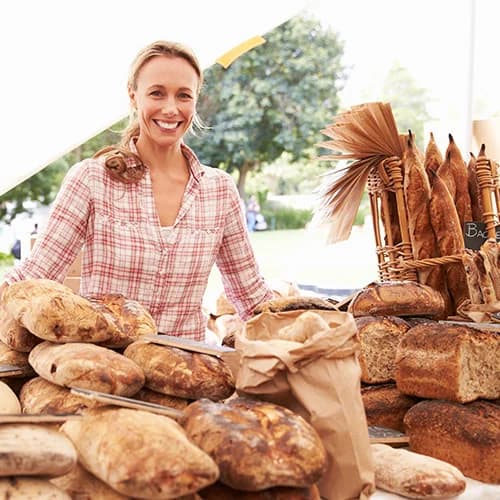
Your first customers are almost never strangers. They're the coworker who asks what you baked this weekend, the neighbor who watches your dog, the parents in your kid's class group chat. These people already trust you, which is the single hardest thing to earn in food, and they're the ones who will tell other people about you. Warm leads first, always.
The awkward part is the ask. Announcing "I'm starting a bakery" to people who know you can feel like a lot. It's easier if you frame it as a specific, low-stakes offer instead of an identity change: you're doing a batch of six focaccias this Friday, first come first served, here's the price. That's a concrete thing someone can say yes to.
- Post one clear offer to your personal social accounts, not a vague "taking orders now" announcement.
- Tell ten people directly, in a text or in person, rather than relying on a single public post.
- Ask your first few buyers if you can send them a photo the next time you bake that item. That's permission to follow up, which is worth more than a follower.
- Bring samples somewhere with a captive audience: an office, a group meeting, a team practice, a family gathering.
- Ask every happy customer to tag you or mention you to one person. Most will, but only if you ask out loud.
Decide What You Want to Be Known For
Bakers who sell everything are hard to remember. Bakers who make one exceptional thing get recommended by name. When someone in your neighborhood asks "does anyone know where to get a good birthday cake," you want to be the answer that pops into three people's heads at once, and that only happens if you're associated with something specific.
Pick a short menu, two to four items, that share equipment and ingredients so your bake day stays sane. A signature item plus a couple of easy add-ons is plenty. You can widen the menu later once you know what people actually reorder, and reorders are the only honest data you'll get about what's working.
- Choose items that hold up well for a day or two if you're doing pickups or markets. Fragile bakes limit where you can sell.
- Price for your time from the start, not just ingredients. Underpricing attracts customers you can't afford to keep.
- Keep your product photos consistent (same surface, same light, same angle) so your feed reads as one recognizable brand.
- Name your items something a person can say easily. "The maple morning bun" travels better than "Item 3."
Show Up Where Your Neighbors Already Are
Local discovery still happens in oddly old-fashioned places. Neighborhood Facebook groups, buy-nothing and community groups, Nextdoor threads, school and church newsletters, coffee shop bulletin boards, and the local subreddit are where people actually ask "any recommendations for..." Being the person who answers those questions, politely and without spamming, is worth more than a paid ad at this stage.
- Read each group's rules on selling before you post. Getting removed from the biggest local group is a real setback.
- Post value, not just offers. A photo of this week's bake with a short note about how it's made reads better than a price list.
- Answer recommendation threads with a genuine, brief reply. Overselling in someone else's thread backfires.
- Ask a local coffee shop, bottle shop, or salon if you can leave a small stack of cards. Businesses without a kitchen are often happy to point people your way.
- Set your Instagram or TikTok location and bio to your city or neighborhood so local searchers can actually find you.
Make Ordering Painfully Easy
This is where most home bakeries quietly lose customers. Someone sees your croissants, wants three, and then hits a wall: they have to DM you, wait for a reply, agree on a time, and figure out how to pay you. Every extra step is a place for interest to die. The goal is that a person can go from "those look good" to "paid and scheduled for Saturday" without talking to you at all if they don't feel like it.
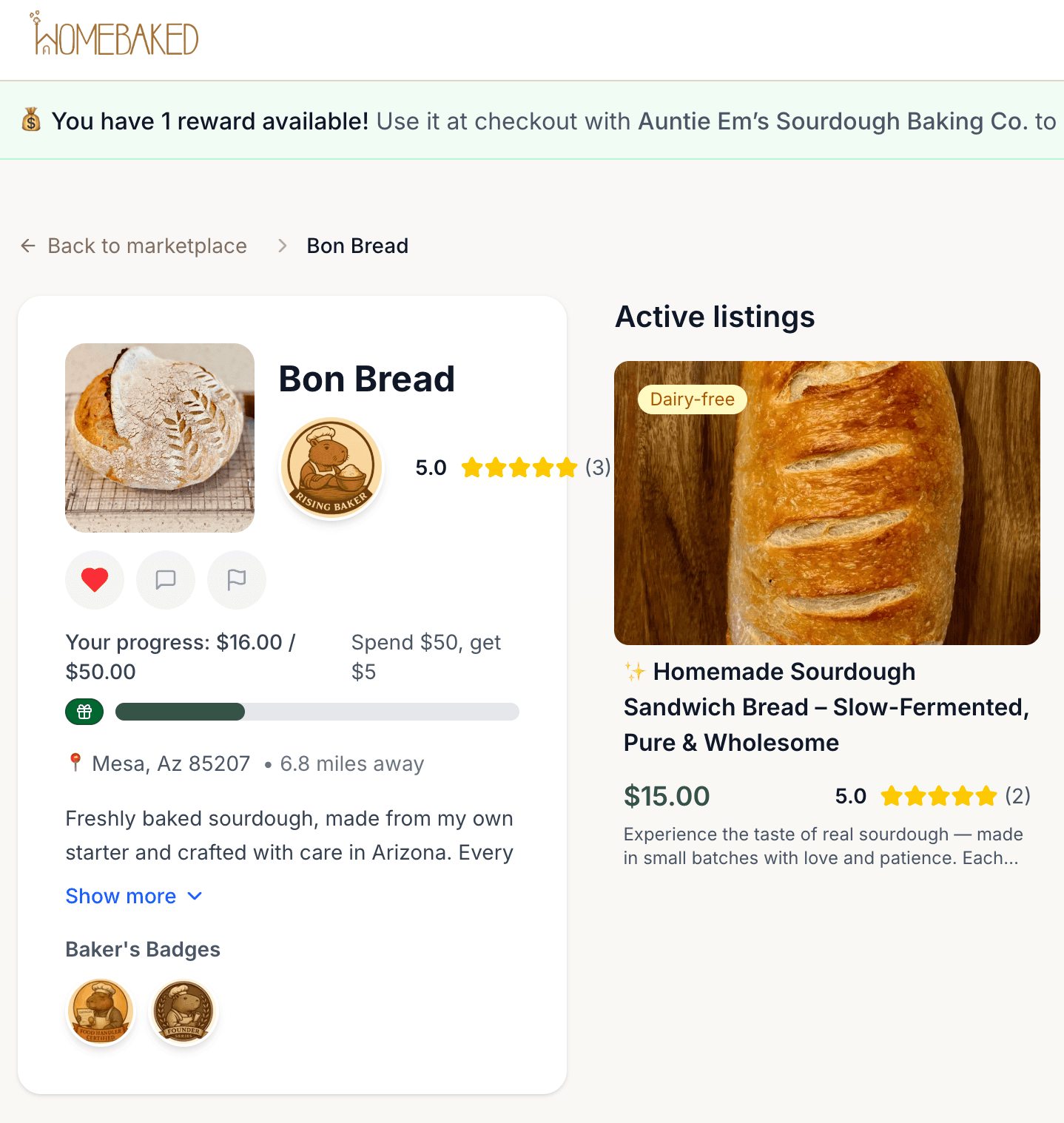
It's worth having one place that holds your menu, your pickup windows, and your payment instead of stitching it together from a link-in-bio, a payment app, and your text messages. That's essentially what Homebaked was built to be for cottage bakeries: a real storefront you can get live in about five minutes with no hosting to figure out, no order fees for you or your customer, and every DM, text, and email landing in one thread so nothing gets lost between apps on a busy Friday night.
- Publish your pickup or delivery windows up front. "Saturdays, 9 to 11" removes an entire back-and-forth conversation.
- Take payment at the time of order, not at pickup. It cuts no-shows dramatically.
- Set an order cutoff (say, Wednesday night for a Saturday bake) and hold to it so your prep stays predictable.
- Confirm every order with a short message that repeats the time and address. Confused pickups become bad reviews.
- Keep a simple record of who ordered what. Remembering that someone's kid is gluten free is the kind of detail chains can't compete with.
Get In Front of People Face to Face
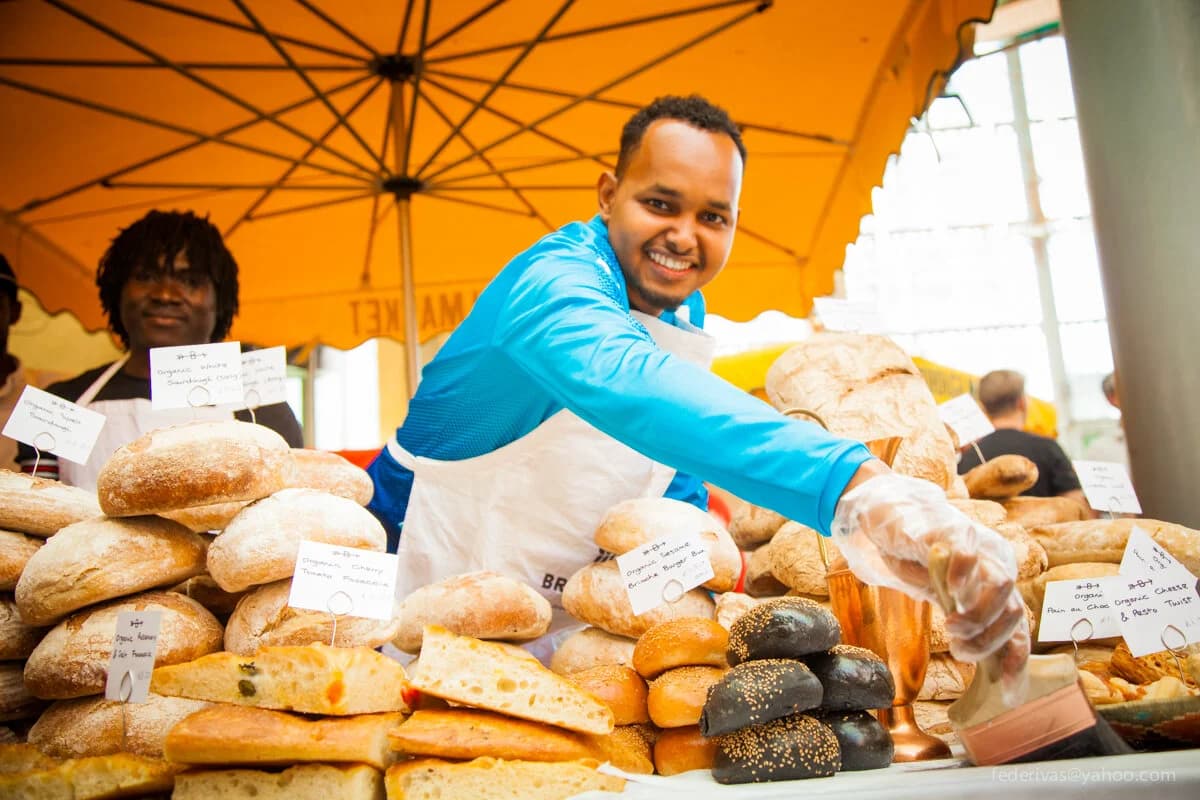
Nothing converts strangers like a taste. Farmers markets, craft fairs, school fundraisers, office lobbies, apartment building events, and pop-ups hosted inside a friendly local business all put your bakes in front of people who have never heard of you. Even one market day can hand you a dozen names, especially if you plan for it.
- 1Check your state's cottage food rules first so you know what you can legally sell and where, and what your labels need to say.
- 2Start with one small event rather than committing to a season of weekly markets.
- 3Bring a limited menu in volume instead of a wide menu in singles. Empty spots on the table look worse than a short list.
- 4Offer samples of your signature item, cut small. This is the whole reason you're there.
- 5Put a visible sign with your name, what you make, and how to order for next week. Most sales from a market happen after the market.
- 6Collect contact info with a clipboard or a QR code, and be specific about what people are signing up for ("weekly menu, one message a week").
- 7Follow up within three days, while the taste is still a memory.
Turn One-Time Buyers Into Regulars
Getting a new customer takes real effort. Getting an existing one to order again takes a reminder. A microbakery gets stable when a core group of thirty or forty people orders on a rhythm, and that rhythm comes from you showing up in their week consistently rather than from any single clever post.
The mechanics can be simple. Announce your menu on the same day every week so people learn when to look for it. Reward the repeat buyers, because they're also your loudest referrers. Homebaked has loyalty and promo tools built in for exactly that, so a punch-card-style perk or a "bring a friend" discount runs itself instead of living in a notebook you forget to check, and payouts land straight in your bank account through Stripe.
- Publish your menu on a fixed schedule. Predictability is a marketing tool.
- Tuck a small card or a handwritten note into every order. It costs almost nothing and gets photographed.
- Offer a standing subscription for bread. Weekly loaf buyers are the most reliable income a home bakery can have.
- Follow up once after a first order to ask how it went. Most bakers never do this, and customers remember it.
- Save your best reviews and messages, and share them occasionally. Social proof from a neighbor is more persuasive than anything you can say about yourself.
Common Mistakes That Slow You Down
- Waiting until the branding is perfect. Your first customers care about the croissant, not the logo.
- Posting only when you have something to sell, which trains people to scroll past you.
- A menu so long that nothing is memorable and your bake days run twelve hours.
- Chasing followers in other cities. A thousand distant followers are worth less than fifty neighbors.
- Discounting early and often, which sets a price ceiling you'll fight for months.
- Letting orders live in four different inboxes until you lose one and disappoint someone.
- Skipping the local cottage food rules and labeling requirements, which is the one shortcut that can actually shut you down.
A Realistic First Month
- 1Week one: pick your two to four item menu, price it honestly, and bake a test round for friends in exchange for blunt feedback.
- 2Week one: check your state's cottage food requirements and get your labels sorted.
- 3Week two: set up one place where people can see the menu, pick a time, and pay, and take decent photos of every item.
- 4Week two: make your first specific offer to your personal network with a fixed quantity and a fixed pickup window.
- 5Week three: introduce yourself in two local groups and answer any recommendation threads you find.
- 6Week three: fill and deliver those first orders, and ask each buyer for one referral.
- 7Week four: book one small in-person event and start a simple weekly menu message to everyone who has bought from you.
- 8Ongoing: repeat the weekly menu on the same day, every week, until it becomes something your neighbors expect.
None of this is fast, and none of it is complicated. The bakers who build a steady customer base are usually just the ones who kept posting the same menu on the same day and kept their bakes consistent long enough for word of mouth to catch up. Bake something good, make it easy to buy, and let the people who love it do some of the talking for you.