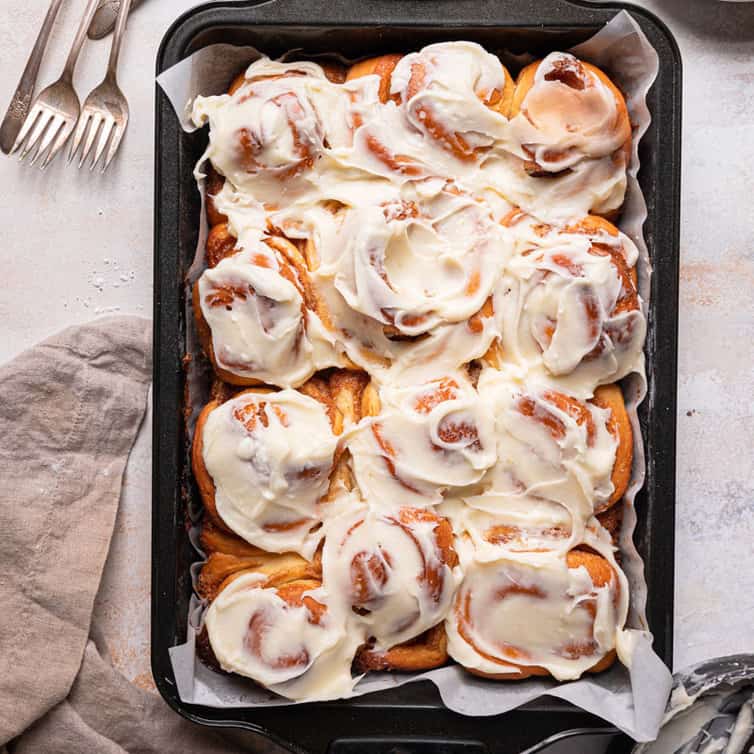
Classic Soft Cinnamon Rolls, Gluten Free
Pillowy enriched dough wrapped around a dark brown sugar and cinnamon swirl, baked until the centers are barely set and finished with tangy cream cheese icing. This is the version worth setting an alarm for.
Ingredients
Makes 12 rolls
Dough
Filling
Cream Cheese Icing
Instructions
- 1
Wake up the yeast
Warm the milk to about 110°F, roughly bathwater temperature. Stir in the yeast and granulated sugar and let it stand 5 to 10 minutes, until foamy on top. If nothing happens, the yeast is spent and you need a fresh packet.
- 2
Mix the dough
Whisk the gluten-free flour blend with the xanthan gum and salt so the gum is evenly distributed before any liquid hits it. Add the dry mix, eggs, and melted butter to the yeast mixture in a stand mixer bowl and mix with the paddle attachment on low until combined, then beat on medium for 3 minutes. Use the paddle rather than the dough hook; with no gluten to develop, you are simply making sure everything is evenly hydrated, and a hook just pushes the sticky dough around.
- 3
Rest to hydrate
Cover the bowl and let the dough sit at room temperature for 25 to 30 minutes. This gives the rice flours and starches time to absorb the liquid. The dough will go from slack and soupy-looking to noticeably thicker and more scoopable, which is exactly what you want before rolling.
- 4
First rise
Scrape the dough into a buttered bowl, smooth the top with a wet spatula, and cover. Let it rise somewhere warm for 50 to 70 minutes, until it has grown by about half again. Gluten-free dough rarely doubles the way wheat dough does, so judge by visible puffiness rather than waiting for a true doubling.
- 5
Make the filling
Beat the softened butter with the brown sugar, cinnamon, and salt into a smooth paste. Keep the butter softened, not melted, so the filling stays anchored in the spiral instead of leaking out during baking.
- 6
Roll and fill between parchment
Butter a 9x13-inch pan. Scrape the dough onto a large sheet of parchment, lay a second sheet on top, and roll to a 16x12-inch rectangle. Peel off the top sheet. This dough is too sticky and too fragile to roll on a floured counter, and adding extra flour to make it behave will make the rolls gritty. Spread the filling to the edges, leaving a bare one-inch strip along the far long edge, and brush that strip with water.
- 7
Roll, chill, and cut
Using the bottom parchment to lift and guide, roll the dough into a log from the long edge nearest you, peeling the paper back as you go, then pinch the seam. Slide the log onto a tray and chill for 20 to 25 minutes to firm up the butter. Chilled dough cuts into clean rounds instead of smearing. Trim the ends and cut 12 pieces with unflavored dental floss, then arrange cut side up in the pan.
- 8
Second rise
Cover and proof for 40 to 55 minutes, until puffy and just touching. Heat the oven to 350°F partway through. These can be shaped and refrigerated overnight, then rested at room temperature for about an hour before baking.
- 9
Bake
Bake for 26 to 32 minutes. Gluten-free rolls need a few extra minutes and a firmer finish than wheat rolls, since underbaked centers stay gummy rather than gooey. Look for deep golden tops and an internal temperature of 200 to 205°F in the middle roll, and tent with foil if the edges darken too soon.
- 10
Ice and serve
Beat the cream cheese and butter smooth, then add the powdered sugar, vanilla, milk, and salt and beat until fluffy. Cool the rolls in the pan for 10 minutes, then spread the icing over the warm tops. These are at their absolute best within a few hours of baking, so serve them warm.
You did it! Help us bring baking back home by selling your delicious baked goods on Homebaked!
Baker's Tips
- 1.
Weigh your flour if you can. A cup scooped straight from the bag can carry 20 percent more flour than a spooned-and-leveled cup, and that alone is the most common reason homemade rolls come out tough.
- 2.
A cold kitchen slows the rise dramatically. Set the covered bowl inside your oven with only the light on, or next to a mug of just-boiled water, for a reliable warm spot.
- 3.
Dark brown sugar has more molasses than light, which gives the filling a deeper caramel note and a slightly gooier swirl. Light brown works, just expect a milder result.
- 4.
For extra soft sides, nestle the rolls close together with barely any gap. For crisper edges all around, give each roll more room in a larger pan.
- 5.
Save a spoonful of icing to add right before serving. The first layer soaks in, and the second stays glossy on top.
- 6.
Cinnamon varies wildly in strength. Freshly opened Vietnamese cinnamon is far more potent than a jar that has been in the cupboard two years, so taste the filling and adjust.