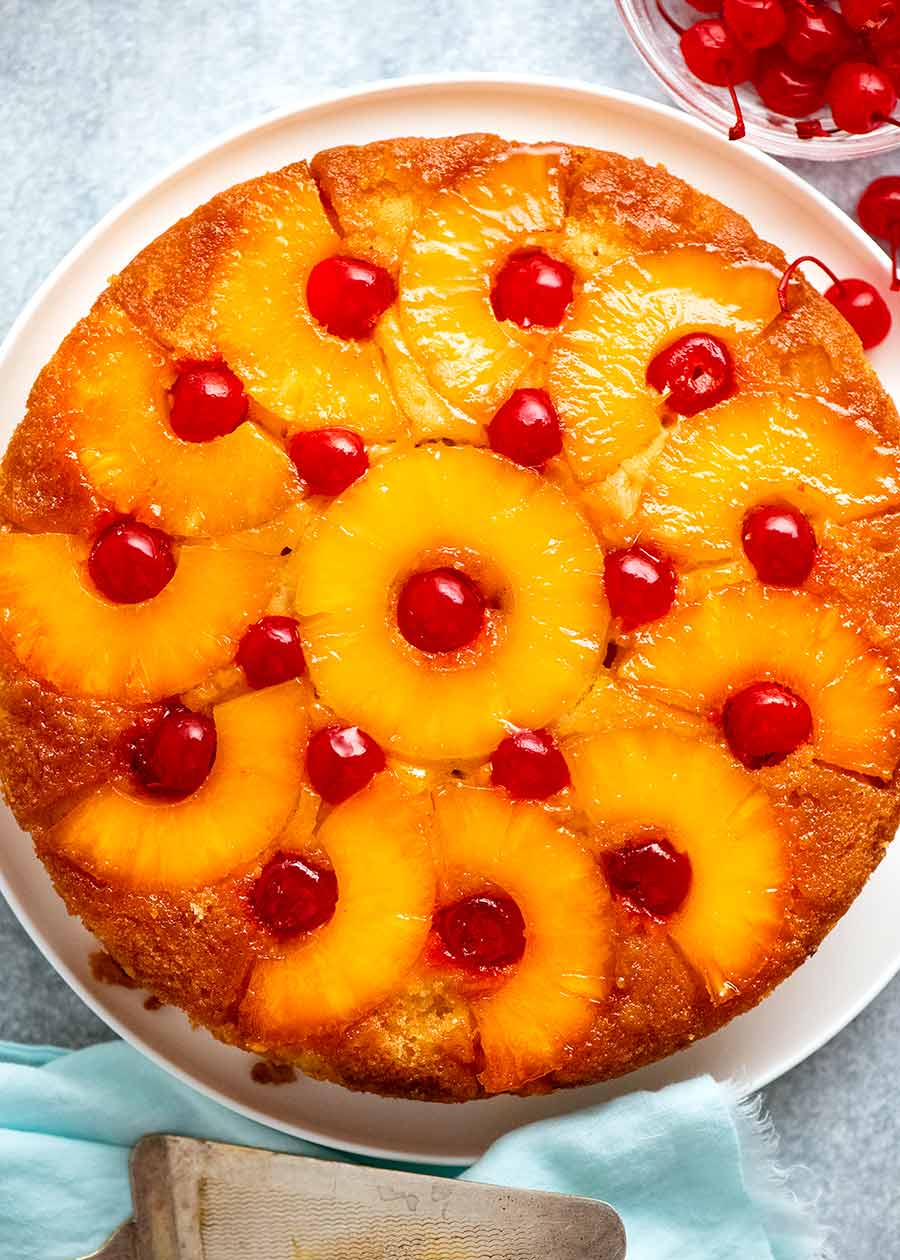
Pineapple Upside-Down Cake
A buttery sour cream cake baked over a dark brown sugar caramel and golden pineapple rings, then flipped while warm so the glaze soaks down into the crumb. It's the retro showstopper that takes about fifteen minutes of real work.
Ingredients
Makes one 9-inch cake
Caramel topping
Cake
Instructions
- 1
Heat the oven and dry the fruit
Set a rack in the lower third of the oven and heat to 350°F. Grease a 9-inch round cake pan that is at least 2 inches deep and line the bottom with a parchment round. Drain the pineapple over a bowl and keep 1/4 cup of the juice for the batter. Lay the rings and cherries on paper towels and blot them well on both sides. Fruit that goes into the pan wet releases that water into the caramel and leaves you with a soggy, pale top.
- 2
Build the caramel layer
Pour the melted butter evenly over the bottom of the pan, then sprinkle the dark brown sugar over it in a smooth layer, breaking up any lumps with your fingers. Resist the urge to stir the two together. The sugar melts into the butter in the oven and sets into a glossy caramel; stirring now just makes it grainy.
- 3
Arrange the pineapple
Place one ring dead center and fit the remaining six around it, nudging them close but not overlapping. Press a cherry into the hole of each ring and tuck the extras into the gaps around the edge. Press everything down gently so it sits flush in the sugar. Whatever pattern you make now is exactly what you'll see when you flip the cake, so take the extra thirty seconds.
- 4
Whisk the dry ingredients
In a medium bowl, whisk the flour, baking powder, baking soda, and salt together for a good fifteen seconds. You want the leaveners fully dispersed before they ever meet liquid, otherwise you get bitter pockets and an uneven rise.
- 5
Cream the butter and sugar
Beat the softened butter and granulated sugar in a large bowl on medium-high speed for 3 to 4 minutes, until noticeably paler and fluffy. Scrape the bowl once partway through. This step whips air into the fat, and that air is most of what keeps the crumb light enough to sit under heavy pineapple rings.
- 6
Add the eggs and sour cream
Beat in the eggs one at a time, mixing about 30 seconds after each, then add the sour cream and vanilla and mix until smooth. If the mixture looks curdled, your eggs or sour cream were too cold; keep mixing and it will come back together.
- 7
Alternate the flour and liquid
Stir the reserved pineapple juice and milk together in a measuring cup. With the mixer on low, add the flour mixture in three additions alternating with the juice mixture in two, starting and ending with flour. Stop the moment the last streaks disappear. Overmixing here builds gluten and turns a tender cake tough.
- 8
Spread the batter over the fruit
Drop the batter over the pineapple in large spoonfuls spaced around the pan, then gently spread it to the edges with an offset spatula. Dolloping first means you aren't dragging the spatula across the fruit and shifting your arrangement. Rap the pan on the counter two or three times to settle the batter into the gaps.
- 9
Bake
Bake for 40 to 45 minutes, until the top is deep golden, springs back when pressed in the center, and a toothpick comes out with a few moist crumbs but no wet batter. An instant-read thermometer in the center should read 200 to 205°F. If the top is browning fast before the center is set, tent it loosely with foil for the last 10 minutes.
- 10
Rest 10 minutes, then invert
Set the pan on a wire rack for exactly 10 minutes. Run a thin knife around the edge, place a serving plate upside down over the pan, and flip the whole thing in one confident motion. Leave the pan in place for a minute to let the caramel drip down, then lift it away. Don't let it sit much past 10 minutes or the caramel cools, grips the pan, and takes your pineapple with it.
- 11
Patch and serve
If any fruit or caramel stuck to the pan, scrape it off and press it right back into place while everything is still warm and pliable. Nobody will ever know. Serve warm or at room temperature, with lightly sweetened whipped cream if you like.
You did it! Help us bring baking back home by selling your delicious baked goods on Homebaked!
Baker's Tips
- 1.
Blotting the pineapple and cherries dry is the single highest-impact thing you can do here. Canned fruit carries a surprising amount of surface liquid, and it dilutes the caramel into syrup.
- 2.
A 10-inch cast-iron skillet works beautifully in place of the cake pan. Melt the butter right in the skillet, sprinkle the sugar over it, and bake as written; start checking at 35 minutes since the cake is shallower.
- 3.
Fresh pineapple is lovely but wetter and firmer than canned. Cut 1/2-inch rings, core them, and sauté in a little butter for 3 to 4 minutes per side to drive off moisture and soften them before arranging.
- 4.
Cold butter won't cream, and cold eggs or sour cream will seize the creamed mixture. If you forgot to set them out, put the eggs in warm water for 5 minutes and microwave the sour cream for 10 seconds.
- 5.
The caramel will look alarmingly thin and bubbly when the cake comes out of the oven. It thickens as it cools, which is exactly why the 10-minute rest before flipping matters.
- 6.
For a darker, more complex caramel, swap 2 tablespoons of the dark brown sugar for an equal amount of unsulphured molasses, or add a pinch of flaky salt over the sugar layer.
Equipment
- 9-inch round cake pan, at least 2 inches deep (or a 10-inch cast-iron skillet)
- Parchment paper
- Electric hand mixer or stand mixer with paddle attachment
- Medium and large mixing bowls
- Whisk
- Offset spatula or rubber spatula
- Wire cooling rack
- Flat serving plate wider than the pan
- Instant-read thermometer (optional)
Storage
Keep the cake loosely covered at room temperature for up to 2 days; the caramel stays glossiest this way. For longer storage, refrigerate airtight for up to 5 days and let slices come to room temperature, or warm them for 15 seconds in the microwave to loosen the caramel. To freeze, chill the cake completely, wrap whole or in slices in plastic and then foil, and freeze up to 3 months; thaw overnight in the fridge and rewarm at 300°F for 10 minutes.